Press
News Release
FOR IMMEDIATE RELEASE - May 11-22 - Halifax, NS
“Is It the start of a Demolition Derby in the Old West End of Halifax?”

Heritage Trust of Nova Scotia (HTNS) is increasingly disturbed by the razing of late Victoria and Edwardian houses in what could be a future Heritage Conservation Area or a series of heritage streetscapes in Halifax. “Is It the start of a Demolition Derby in the old West End?” asks HTNS President Sandra Barss. The most recent building at risk is an intact – if recently neglected – late Victorian house at 1245 Edward Street.
Dalhousie University bought the building in July 2021 and has “no plans” for it. However, the water has been disconnected, plantings transplanted by Dalhousie staff, and a demolition permit obtained from HRM in the last few days. This is a substantial, heritage registration-worthy building. Its ties, through ownership, include well-known Halifax businesses such as Kelly’s Luggage and an outstanding home on Young Avenue (the Hobrecker mansion/ “Lindola”). Its social history links generations of Halifax pre-schoolers and female university students.
In this period of increasing shortages of affordable housing and the replacement of family housing on the Peninsula, a building such as 1245 Edward Street should remain in active use. It should not become a parking lot, even as an interim use, or fodder for the landfill.
Heritage Trust of Nova Scotia advances the public knowledge of the historical and architectural importance of heritage buildings and sites in Nova Scotia by conducting research in this matter and by disseminating the results of such research.
-30-
HRM Committee Chair: Andrew J Murphy (902)830-6430
Media Contact: Kim Dickson - communications@htns.ca or (902)759-3716
News Release
FOR IMMEDIATE RELEASE - JUNE 3-21 - HALIFAX, NS
COURT OF APPEAL DISMISSES BRUNSWICK CASE - HRM Council Handed Nearly Unlimited Discretion Over Protection Policies
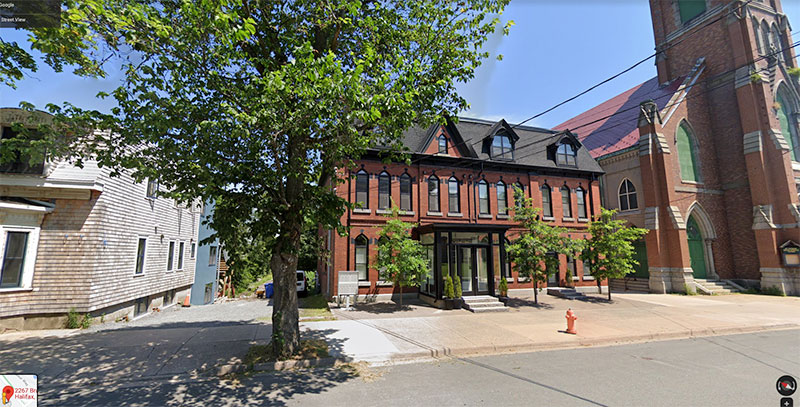
HALIFAX—A critical appeal of the scope of Halifax Regional Municipality’s discretion to approve new development has been dismissed today by the Nova Scotia Court of Appeal (NSCA). The Heritage Trust of Nova Scotia appealed the Nova Scotia Utility and Review Board (UARB) decision to allow a nine-storey tower on Brunswick Street, one of Canada’s premier heritage streetscapes and Nova Scotia’s first heritage conservation area.
| Brunswick St - 9 storeys allowed |
 |
 |
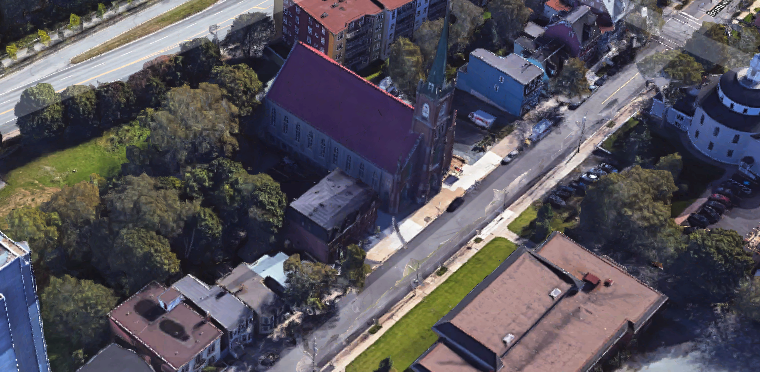 |
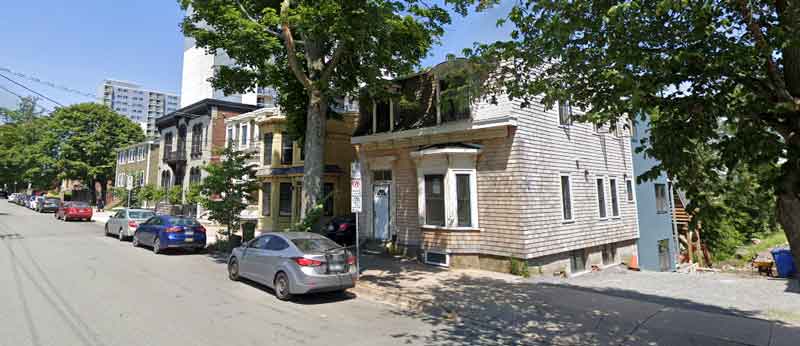
“To say we are disappointed in the ruling handed down by the Court is an understatement. This nine-storey red brick tower is going to stick out of the most intact wooden Georgian streetscape in Canada like, well, a sore thumb,” said Andrew Murphy, President of the Heritage Trust.
“We support respectful development that complements existing heritage buildings. In our view, Council made a significant mistake in approving this development; they didn’t even follow their own expert heritage planner’s advice. The denial of our appeal sets a bad precedent by sending a signal to Council and developers that they can pick and choose which rules to follow,” Murphy added.
The appeal posed two critical questions to the Court of Appeal:
First, did the UARB err in law by failing to apply Peninsula North Secondary Planning Strategy Policy 9.3.2.1? It mandates the proposed nine-storey high-rise “complement or maintain the existing heritage streetscape” by being “similar” in height and other qualities to adjacent residential heritage properties, including the neighbouring Huestis House. The overwhelming majority of properties in the Brunswick Street Heritage Area are, like Huestis House, two-storey wooden structures dating to the 19th and even 18th centuries.
In a major blow to heritage groups, environmentalists, and the many citizens and visitors who value the historic character of our capital city, the Court of Appeal decided it should be left to Council to “weigh the competing [policy] interests.” HTNS argued that the policies are not in competition, and should be applied according to their plain meaning.
Second, HTNS asked the Court to find the UARB erred in law by accepting the evidence of HRM’s planner, who conceded in cross-examination he was not qualified to give architectural evidence regarding “complementary” mitigation strategies, while giving little weight to the evidence of two of Nova Scotia’s most decorated architects.
While the Court respectfully disagreed with HTNS, it didn’t provide reasons for allowing architectural evidence from a planner.
“This case should be an alarm bell to the new members of HRM Council, the public, and NGOs trying to improve Halifax, who are now completely out to sea when it comes to the whim of Planning Staff and Council,” said David Donnelly, one of Canada’s leading environmental lawyers, who argued the HTNS case before the UARB.
“Council’s picking and choosing which policies suit a particular development, and which policies to ignore, is a recipe for some pretty weak planning, particularly when you’re preferring a planner’s advice regarding architecture over two highly-regarded architects who perfected heritage conservation in Nova Scotia,” Donnelly added.
HTNS had retained architects Brian MacKay-Lyons and Gary Hanley as expert witnesses for the UARB appeal, but they were not allowed to give oral testimony.
“We’re becoming increasingly frustrated by the mixed messages the City is sending. The Heritage Trust has been a big supporter of the Centre Plan process, including donating literally thousands of hours of research to the City planners—the research needed to establish the Heritage Conservation Districts the Centre Plan proposes. One of those HCDs is going to be right there on Brunswick Street. HRM clearly recognized a need to update that legislation, make it consistent with the protections and incentives they’re putting in place for areas like Schmidtville and Downtown Dartmouth. Yet this development violates both existing bylaws and those soon to replace them. The City is contradicting itself and undermining its own efforts at heritage conservation, which have been years in the making. We just don’t get it,” Murphy added.
- 30 -
Media Contact:
Kimberly Dickson, Communications Chair
communications@htns.ca
902-423-4807
Andrew J. Murphy, President
andrewmurphy@htns.ca or (902)
902-
830-6430
News Release
Heritage Trust of Nova Scotia calls on the Province to levy the maximum penalty allowed under the Heritage Property Act for illegal demolition of provincially-designated 1760s landmark
FOR IMMEDIATE RELEASE - DECEMBER 10-20 - HALIFAX, NS
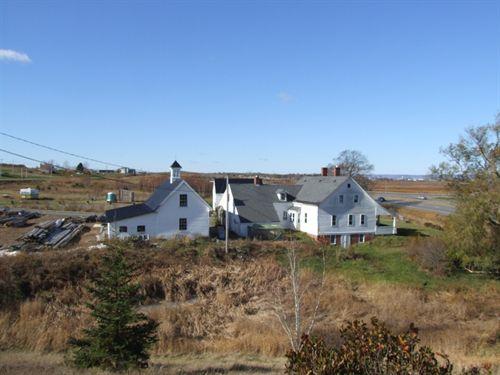
Heritage Trust of Nova Scotia condemns the illegal demolition of a provincially-designated 1760s landmark in Avonport and calls on the Province to levy the maximum penalty allowed under the Heritage Property Act.
 |
 |
The Reid House, designated in 1993 as a Provincial Heritage Property by the Province of Nova Scotia, and a well-known landmark visible from Hwy 101, was demolished without the permission of the Minister of Communities, Culture and Heritage, in contravention of the Heritage Property Act.
Both municipal and provincial officials are reported to have informed the owner in November about the legal obligations involved in applying to demolish a provincially-registered property. Section 9 of the Act lays out the process for applying for de-registration, a prerequisite for demolition. The Land Use By-law of the Municipality of Kings County specifically states (Section 1.7):
Nothing in the By-Law shall exempt any applicant or property owner from compliance with any other applicable municipal, provincial or federal legislation or from any license, permission, permit authority or approval required by this or any other by-law of the Municipality or other lawful authority. |
Heritage Trust of Nova Scotia calls on the Minister to demonstrate the Province’s respect for and awareness of the value that built heritage brings to the Province and its residents by pursuing all legal remedies against this shocking disregard for the law. Nothing will bring back this landmark building, but a large fine may indicate to others that the Province is serious about protecting its heritage resources. The Heritage Property Act allows a penalty of up to $250,000 for contravention of the Act by a corporation (Section 25.2).
Heritage Trust of Nova Scotia, founded in 1959, is a non-profit registered charity whose goal is to conserve buildings and sites of historic significance, and to promote this important cultural component of Nova Scotia’s identity.
- 30 -
Media Contact:
Kimberly Dickson, Communications Chair
communications@htns.ca
902-423-4807
News Release
Heritage Trust of Nova Scotia Announces Diverse Group of Heritage Awards
FOR IMMEDIATE RELEASE - JUNE 7-20 - HALIFAX, NS
HALIFAX, NS, June 7, 2020…..The Board of Heritage Trust of Nova Scotia (HTNS) has announced five Built Heritage Award recipients, after recently endorsing the HTNS Awards Committee’s recommendation.
For the first time, HTNS will recognize a project for excellence in the respectful insertion of a new building among heritage buildings: Brian MacKay-Lyons of MacKay-Lyons Sweetapple Architects repurposed an existing 19th century building and attached a new-build which reflects the vocabulary of Lunenburg’s marine industrial buildings. The resulting B2 Lofts provides six residential units atop two main floor commercial spaces , which pay homage to the town’s UNESCO heritage status with their lovely design and bright colours.
The other winners for 2019 and their award categories are:
•Bank of Montreal Building, Lunenburg, owned by Garth Turner (Commercial Adaptive Reuse);
•Kentville Library in the former St Stephen and St Paul United Church, owned by John Parsons (Places of Worship);
•Old Town Clock, Halifax, owned by Government of Canada (Exterior Conservation of an Institutional Building); and
•White Cottage, Chester, owned by Mark Narsansky and Philip Mitchell (Excellence in Supporting Heritage Conservation).
“Every project had its own story of meeting unexpected challenges or finding new opportunities,” said committee chair, William Breckenridge. “That is what makes this recognition so rewarding.”
Few challenges are as extreme as Chester’s White Cottage where prospective buyers were advised by the realtor not to try to save it. The new owners discovered so many problems that they had to take it down to the ground, numbering pieces as they went and then storing the house in container boxes while the foundation was rebuilt and suitable material found to replace anything that was rotten or not salvageable. Initially, the committee discussed intently whether to consider a totally rebuilt house. However, one of the mandates of the awards committee is to recognize properties preserved in the face of probable loss. And the likely fate of this property, had it not been bought by the current owners, was demolition of the existing cottage dating, in parts, from the late 1700s-early 1800s and division of the waterfront lot for re-sale and development.
In the case of the Old Town Clock, early consultation by federal staff with HTNS and local experts steered the proposed conservation work more in line with best practices as laid out in the federal Standards and Guidelines for the Conservation of Historic Places in Canada.
The original structure of the Bank of Montreal Building in Lunenburg was completed in 1907 and is a rarity in the area, being constructed of grey Shelburne granite while the Kentville Library’s beauty is accentuated by the incredible stained glass craftsmanship, high ceilings and natural light.
“Visiting the nominated buildings was a real treat and we were truly gratified that all those involved were deeply interested in their local history and proud to have been involved in saving and/or restoring a heritage building,” added Awards committee member Michal Crowe. “There was a common thread of pride in repurposing and refurbishing as well as a heritage vision.”
Usually recipients would be recognized on Historic Places Day (July 4, 2020) but in light of the current global pandemic situation, these 2019 Built Heritage Awards will be formally conferred in 2021 along with any winners from this year.
Canada’s Historic Places Day is a national celebration to encourage Canadians to visit historic places close to home. The Trust’s Built Heritage Awards bring attention to excellence in heritage conservation. The awards are designed to recognize and honour outstanding individuals, groups, companies and government departments who have made a significant contribution towards preserving and rehabilitating Nova Scotia’s built heritage.
Heritage Trust of Nova Scotia, founded in 1959, is a non-profit registered charity whose goal is to con-serve buildings and sites of historic significance, and to promote this important cultural component of Nova Scotia’s identity.
For more information, visit:
www.htns.ca | Twitter @HTNovaScotia | www.facebook.com/HeritageTrustNovaScotia
- 30 -
Media Contact:
Kimberly Dickson, Communications Chair
communications@htns.ca
902-423-4807
News Release
High Rises Win Again at NSUARB
Decision Puts Brunswick Street Heritage Character Under Attack
FOR IMMEDIATE RELEASE - JUNE 03-20 - HALIFAX, NS
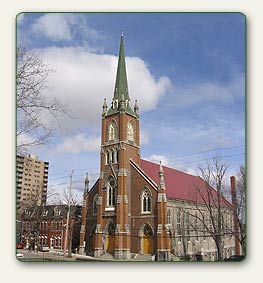 In a decision released on Monday, the Nova Scotia Utility and Review Board “has landed a devastating blow on the Brunswick Street Heritage Area, approving a high-rise building that will dominate two neighbouring registered heritage properties, including St. Patrick’s Church,” said Andrew J. Murphy, President of Heritage Trust of Nova Scotia. “It will tarnish the unique historic character of the area, which contains some of the crown jewels of Halifax’s architectural heritage.”
The NSUARB’s ruling endorses Halifax and West Community Council’s approval of a nine-storey tower addition—presented repeatedly and erroneously as eight storeys—to the former St. Patrick’s Rectory, at 2267 Brunswick Street. The decision flies in the face of MPS Policy 9.3.2.1 ( c ) which clearly demands that proposed developments in the Brunswick Street Heritage Area be “similar” in height and “complementary” to adjacent residential buildings, particularly registered heritage properties.
“In the big picture, it means that no heritage anywhere is safe, if such blatant disregard for the rules which are clearly intended to protect heritage areas from unsympathetic development can occur,” said Murphy.
David Donnelly, counsel to the Heritage Trust, said, “The hearing was eminently fair, but the decision does not deal with the central issue at trial: is a nine-storey modern building made of dark red brick ‘complementary’ or ‘similar’ to a light blue, two-storey heritage building made of wood? Precedent says ‘no,’ but that question never got answered, which seems to defeat the point of the City’s policy protection for Brunswick Street.”
The Brunswick Street Heritage Area has been recognized since the 1960s as the most intact wooden Georgian streetscape in Canada and is lauded as a unique illustration of over 200 years of architectural trends and tastes, from modest vernacular residences to some of the grandest structures in Nova Scotia. In addition to its designation as a Heritage Area, Brunswick Street contains an unusually high concentration of individually registered properties, including sites of municipal, provincial, and national import.
“We were particularly disappointed by the refusal of the Board to hear direct evidence from some of Canada’s most authoritative architects on this matter,” Murphy commented.
Mr. Murphy was referring to two expert witnesses retained by the Trust: Brian MacKay-Lyons, an architect and urban designer of international renown, and Gary Hanley, one of Nova Scotia’s most decorated heritage restoration architects. Mr. MacKay-Lyons and Mr. Hanley strongly recommended against allowing the nine-storey tower, as had the City’s own Heritage Planner, Aaron Murnaghan. Much to the dismay of the Trust, Mr. Murnaghan was not allowed to testify.
The case turned on whether the proposed nine-storey tower was “similar” in height to the adjacent residential heritage property, the Huestis House, a municipally-registered property that is two storeys tall, the most common height for a building in the Brunswick Street Heritage Area. The Trust’s inclusion of the Merriam Webster definition of “similar” as “closely resembling each other … [with] the possibility of being mistaken for each other” was apparently in vain: the Board’s ruling establishes a new legal and linguistic standard whereby a height of nine storeys can be considered “similar” to a height of two storeys.
The Board also substituted its own definition of “complementary” regarding scale and architecture for the Heritage Trust’s definition, which sheds little light on why the decision was made.
“I’ve won cases and lost cases, but never on the definition of a word in its transitive verb versus noun sense,” said Mr. Donnelly, echoing a line from the decision.
After a successful redevelopment of the distinctive, three-storey former Rectory into apartments, the current owner, Adam Barrett, proposed a tower addition to the rear of the building. Despite a total of seven meetings of municipal bodies, convened to discuss the proposal, and repeated calls to reduce the addition’s height to a maximum of six storeys, so as to respect the roofline of the neighbouring St. Patrick’s Church, a provincially-registered property, Barrett refused to amend his plans to anything lower than nine storeys.
The Heritage Trust is concerned that the Board’s decision to stick-handle around the very clearly written and thoughtfully composed MPS policies addressed in this case will allow for increased development pressures in one of Canada’s most important heritage districts, and that as a consequence Brunswick Street’s historic character may no longer receive the protection and sensitive treatment it deserves.
Heritage Trust of Nova Scotia, founded in 1959, is a non-profit registered charity whose goal is to conserve buildings and sites of historic significance, and to promote this important cultural component of Nova Scotia’s identity.
For more information, visit:
www.htns.ca | Twitter @HTNovaScotia | www.facebook.com/HeritageTrustNovaScotia
- 30 -
Media Contact:
Kimberly Dickson, Communications Chair
communications@htns.ca
902-423-4807
News Release
Heritage Trust of Nova Scotia donates painting to Halifax Regional Municipality to celebrate Schmidtville Heritage Conservation District
April 15, 2019, HALIFAX, NS
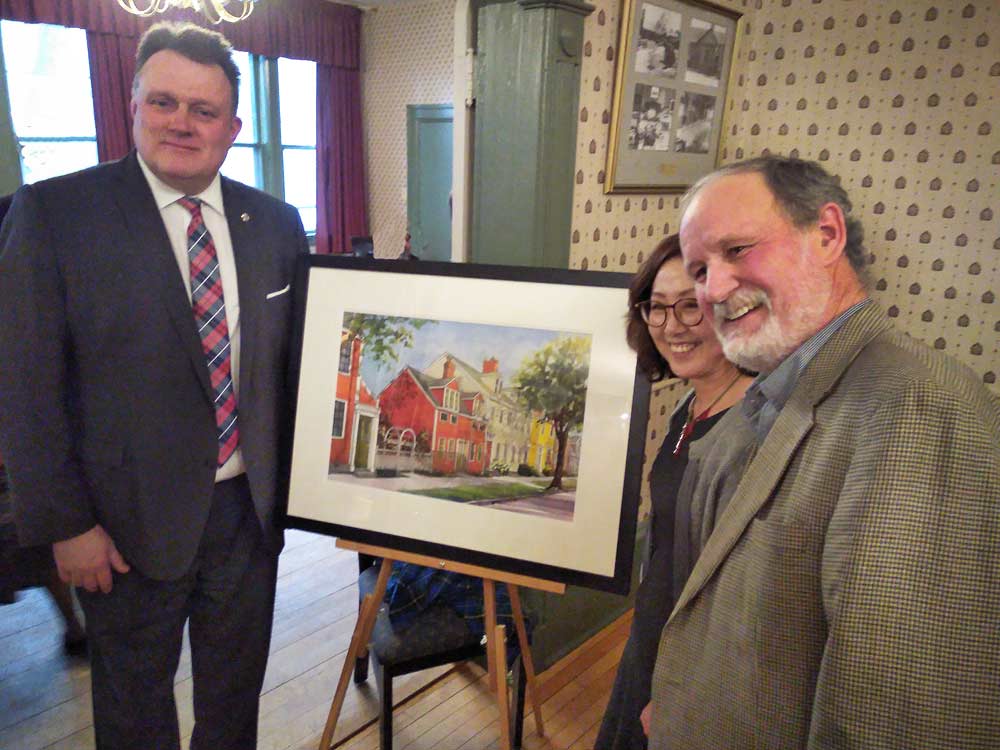
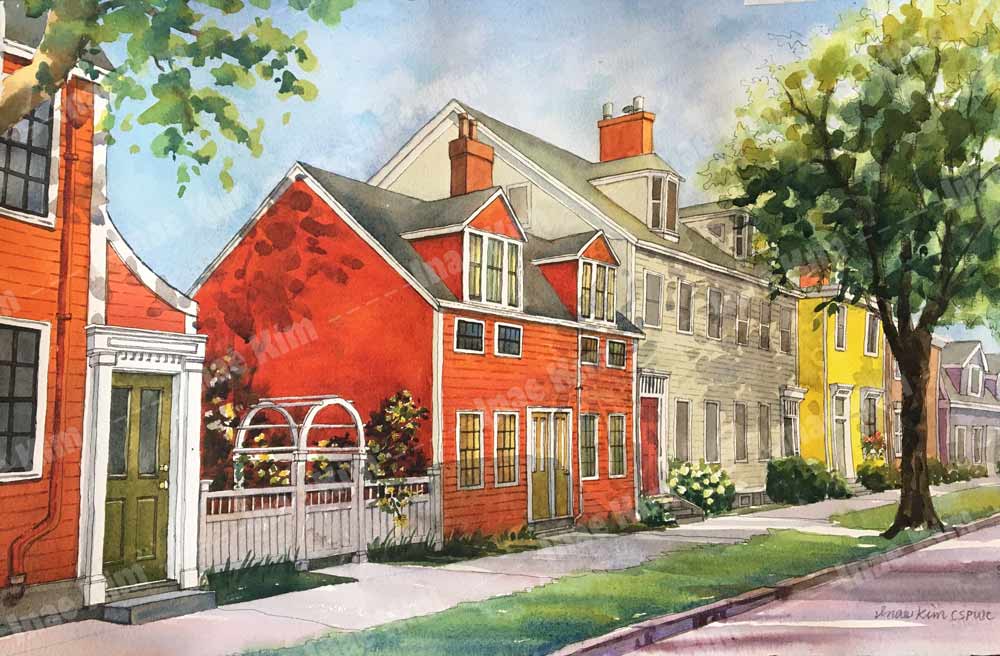 Heritage Trust of Nova Scotia will present an original watercolour painting by Inae Kim of a Schmidtville streetscape to Halifax's Mayor, Mike Savage, during a celebration of the heritage conservation district this evening, April 15th. The event is being hosted by Friends of Schmidtville with the assistance of Heritage Trust, MP Andy Fillmore, and the Halifax Military Heritage Preservation Society at Royal Artillery Park between 6 and 8 pm.
HRM Councillors voted unanimously for the Schmidtville Heritage Conservation District plan when it came before them last summer. Heritage Trust members felt that Council's support for heritage planning deserved special recognition.
The Trust commissioned a painting of Schmidtville to be hung where the public can see it. Ms. Kim's painting shows a Birmingham Street scene, centred on the modest Schmidt cottages, which are owned by Lyndon Watkins, journalist and passionate heritage building preservationist. The painting will be a reminder of the hard work of the Friends of Schmidtville and others in achieving this level of protection for an early Halifax neighbourhood. Their efforts provide for the future enjoyment and benefit of the public.
Heritage Trust of Nova Scotia, founded in 1959, is a non-profit registered charity whose goal is to conserve buildings and sites of historic significance, and to promote this important cultural component of Nova Scotia's identity.
For more information, visit:
www.htns.ca | Twitter @HTNovaScotia | www.facebook.com/HeritageTrustNovaScotia
- 30 -
Media Contact:
Kimberly Dickson, Communications Chair
communications@htns.ca or 902-423-4807
The Presentation - April 15, 2019
 For Immediate Release
  Jun 24-18
MEDIA RELEASE
Heritage Trust Recognizes Heritage Researchers and Volunteers; Welcomes New President
(June 5, 2018, Halifax, NS)
HALIFAX, NS, June 24, 2018….The Heritage Trust of Nova Scotia, welcomed its new President, chartered accountant Andrew J Murphy, and recognized two archivists, a well-known author, and an exceptional volunteer at its AGM held on June 21.
Andrew J Murphy, an accountant, small-scale developer and advocate of repurposing heritage buildings, was welcomed as the incoming President of Heritage Trust after serving as Vice-President Finance. He succeeds Truro businessman, author and heritage consultant, Joe Ballard, who fostered a greater provincial heritage perspective in the organization.
Garry Shutlak and Philip Hartling, archivists with almost a century of work between them, were elected “Honorary Life Members,” by resolution of the Board, for their “distinguished service in promoting the aims and purposes” of the Trust.
Garry Shutlak is known as a great resource for both the serious researcher and members of the general public. For decades, he has contributed material to the Trust’s quarterly newsletter, “The Griffin,” and is a continuing source of information about maps, architecture, and any and all older buildings in the Halifax area.
Philip Hartling, who retired recently after more than four decades of service in the provincial Archives, co-authored one of the Trust’s books Lakes, Salt Marshes and the Narrow Green Strip. He was instrumental in the development of the Archives’ digital built heritage resource and has been a long-time member of both the Heritage Trust of Nova Scotia and the National Trust for Canada.
Elizabeth Pacey, C.M., B.A., D.C.L., well known author and educator about heritage buildings, was made the Heritage Trust’s Board Member Emerita in recognition of her “notable service to the preservation of heritage and advancing the goals of the Society.”
Volunteer Michal Crowe was recognized for her accomplishments in bringing Nova Scotia’s built heritage to the attention of the general public. She conceived the idea for the Trust’s Canada 150 photo exhibit, “Witnesses to a New Nation,” a selection of 150 pre-Confederation buildings from around the province. An active fundraiser for the project, she also sought out volunteer photographers and writers, managed all phases of the project, and then oversaw the production of a full-colour book and calendar, based on the exhibit. The book has been published by SSP; the calendar is available from Heritage Trust.
Other members of the Board are: Peggy Cunningham (VP Heritage), Allan Robertson (VP Finance), Beth Keech (Treasurer), Sandra Barss (Secretary), Lyne Allain (Mahone Bay), Leslie Childs (Amherst), Michelle Davey (Pictou), Kim Dickson (New Glasgow), Rob Ferguson, Anna Fiander (Dartmouth and Summerville), Margaret Herdman (Arichat), Brian Kinsman (Truro), Beverly Miller, Joyce Rankin (Sydney), Suzanne Rent, Allen B Robertson , Brent Schmidt, Chris Sharpe (Shelburne), Krystal Tanner (Wolfville).
Heritage Trust of Nova Scotia, founded in 1959, is a non-profit registered charity whose goal is to conserve buildings and sites of historic significance, and to promote this important cultural component of Nova Scotias identity. The Trust emphasizes research, education and community outreach in its work.
- 30 -
For Media inquiries contact:
Andrew Murphy, President
Email: president@htns.ca
Phone: 902-423-4807
Kimberly Dickson, Communications Chair
Email: communications@htns.ca
Phone: 902-759-3716
For information on HTNS, visit: www.htns.ca
Twitter: @HTNovaScotia
Facebook: Heritage Trust of Nova Scotia
For Immediate Release Jun 5-18
MEDIA RELEASE
The Kenny-Dennis and Acadian Recorder Buildings are important anchors in our capital’s heritage precinct
(June 5, 2018, Halifax, NS) Heritage Trust of Nova Scotia (HTNS) congratulates the provincial government for its decision to retain control of the Acadian Recorder and Kenny-Dennis buildings and to look at the “100 year horizon.” HTNS is hopeful that the government has recognized the desirability of repurposing the two buildings, rather than dismantling the Kenny-Dennis building to reconstruct its façade.
Heritage Trust President, Joe Ballard, says of the Kenny-Dennis building, “It stands as a monument to Halifax’s innovation in the financial sector and the business acumen of the city’s merchants. It is a powerful symbol of immigrant aspiration and success. It has survived trials of fire in 1912, the Halifax Explosion in 1917; and finally in 2018, the Kenny-Dennis Building appears to have survived indifference. The building should be part of our financial future…Development at that corner can respect the area’s history while bringing new life to the precinct.”
In recommending the Kenny-Dennis Building for heritage designation, the report by the Maritime Institute for Civil Society (MIRCS) stated, “The decisions which are made about this building will declare whether the City is able to recognize and honour its own greatness.” The report cited the significance of the heritage precinct which surrounds the Acadian Recorder and Kenny-Dennis buildings identifying its link to many of our freedoms including freedom to associate, freedom of the press, and responsible government.
Ballard says that, “Formalizing and delineating the heritage precinct will be a prudent next step if we are to embrace the physical environment that witnessed and formed the lives of those who fought for and won the freedoms that we enjoy today.”
Heritage Trust of Nova Scotia, founded in 1959, is a non-profit registered charity whose goal is to conserve buildings and sites of historic significance, and to promote this important cultural component of Nova Scotia’s identity.
For information, visit: www.htns.ca Twitter @HTNovaScotia Facebook @HeritageTrustNovaScotia
- 30 -
Media Contact:
Joe Ballard, President
Email: president@htns.ca
Phone: 902-423-4807
Twitter: @HTNovaScotia
Facebook: Heritage Trust of Nova Scotia
For Immediate Release May 28-18
MEDIA RELEASE
Protecting the character of historic Young Avenue through conservation planning
 (May 28, 2018, Halifax, Nova Scotia)
Heritage Trust of Nova Scotia (HTNS) applauds moves by citizens and HRM towards the protection of the character of historic Young Avenue through conservation planning.
HTNS members and supporters celebrated the withdrawal of an appeal (NSURB #M08315) of an amendment to the Halifax Peninsula Land-Use By-Law, approved by Halifax and East Community Council in order to protect the character and form of Young Avenue. The Trust had successfully applied for intervenor status at the scheduled Utility and Review Board hearing. Intervenor status recognizes that the Trust has an interest in, and expertise to offer to, the hearing by the URB.
The Trust's effort was led by VP Finance, Andrew Murphy, who is well known in HRM as a developer with an active interest in planning that supports preserving built heritage as an economic engine in complement to its social and cultural value. Murphy called on Dr Elizabeth Pacey, an author, historian and recognized built heritage expert, to act as expert witness.
"By passing the new Young Avenue LUB the city has affirmed the importance of Young Avenue's '…unique and prominent residential streetscape,' " said Dr Peggy Cunningham, VP Heritage, in her own letter to the URB.
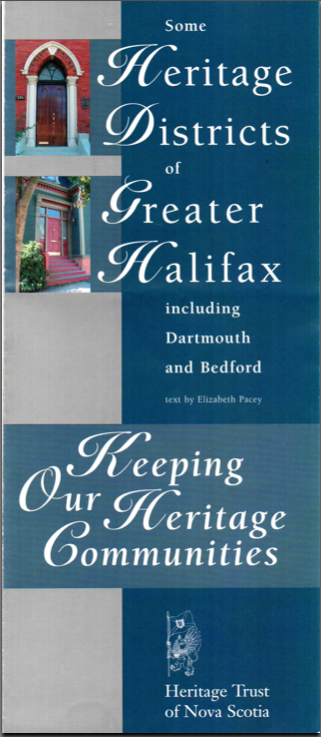
HTNS has a long history of support for planning protection for built heritage. In 2003 The Trust published a pamphlet written by Elizabeth Pacey, who identified ten potential conservation districts (HCDs) in Halifax, Dartmouth, and Bedford. Among them were The Point Pleasant Area and two districts now in the final stages of the HCD development process: The Old South Suburb and Schmidtville.
The recommendation for a Point Pleasant Area HCD recognized buildings on Young Avenue, Tower Road, South Park Street and in the Park itself. The text pointed to the unique character of Young Avenue: Initially developed through, and protected, by an Act of the Legislature, it was intended to be a grand allée of impressive homes leading to Point Pleasant Park. The houses were designed by leading architects of the day for influential community members. Most of the buildings continue to contribute to the heritage character of the Avenue; a few have, unfortunately, been demolished recently.
Heritage Trust, its members and supporters look forward to further work, by government and private citizens such as Young Avenue District Heritage Conservation Society and Save Young Avenue members, to ensure the continued protection of the character of this historic avenue for the cultural and economic benefit of HRM.
Heritage Trust of Nova Scotia, founded in 1959, is a non-profit registered charity whose goal is to conserve buildings and sites of historic significance, and to promote this important cultural component of Nova Scotia's identity.
Media Contact:
Peggy Cunningham, VP Heritage, HTNS
Email: peggyc@dal.ca
Phone: (902) 406-0843 or (902) 423-4807
Twitter: @HTNovaScotia
Facebook: Heritage Trust of Nova Scotia
For Immediate Release May 17-18
MEDIA RELEASE
Volunteer Effort Narrates the Tales and Legends of Some of Nova Scotia's Oldest Buildings
Photo Exhibition and Book Launch - June 2, 2018 - Shelburne
HALIFAX, NS – That oft repeated phrase, "If these walls could talk, they would tell you a story" certainly reflects the passages within Heritage Trust of Nova Scotia's latest book, Witnesses to a New Nation: 150 Nova Scotia buildings that saw Canada's Confederation of 1867.
The book, which was published by Nova Scotia based SSP Publications, will be officially launched on June 2 in Shelburne, Nova Scotia.
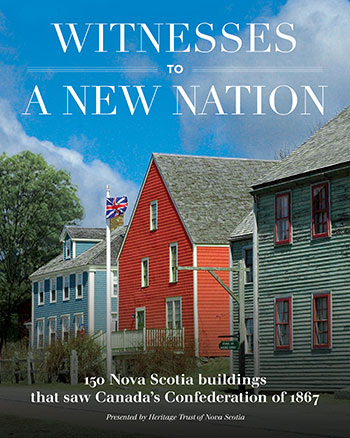 "Witnesses to a new Nation" is a collection of the images that were shared during an exhibition of the same name that toured the Province in 2017. The images reflect diverse buildings, from a stonemason's cottage in Dartmouth to the "Lazaretto" in Pictou County, a quarantine station for maritime travellers.
"The book, and the collection of stories and images is so quintessentially Nova Scotian," says Michal Crowe, Witnesses Project Chair with Heritage Trust of Nova Scotia, and one of the facilitators of the project. "The tales of each of the buildings, and the people who have walked through their halls, were all meticulously researched and written by volunteers across the Province, people who wanted to make sure these stories would be heard throughout the ages."
Crowe cites the story of the Lazaretto as just one of the powerful stories within the book. For years residents of Pictou County had heard the legend of the hospital caring for those arriving by ship with infectious diseases, and that locals would prepare meals and leave them carefully on the steps to avoid catching ailments. The two doctors who founded the hospital themselves took ill, but were miraculously cured. No one could quite pinpoint where the Lazaretto was located – or if its building still existed. Finally, someone happened upon the small site, and discovered it is now used as a part-time summer home for an American resident.
"There are so many beautifully woven stories throughout this book, all told from different perspectives, and images captured through various eyes," said Linda Forbes, also with Heritage Trust and who worked alongside Crowe on the book. "You get a first-hand look at how people from different backgrounds – architects, parishioners, art students and homeowners – experience the structure and history of each of these sites. The result is an exceptional and endearing literary adventure."
After the launch, the book will be available at local Chapters, Indigo and Coles locations as well as online at SSP Publications.
Media Contact:
Allison Garber Communications
Email: allison@allisongarber.ca
Phone: (902) 221-5254
Twitter: @HTNovaScotia
Facebook: Heritage Trust of Nova Scotia
Posted May 27-17
MEDIA RELEASE
What happened on Brenton Street?
Heritage Trust of Nova Scotia is calling for an investigation into the failure to protect buildings that should form part of the Schmidtville Heritage Conservation District, as the Friends of Schmidtville gather to mourn the destruction of the first of eight historic buildings on land owned by the first Chief Justice of Nova Scotia, The Honourable Jonathan Belcher, and by Sir Brenton Halliburton.
Mayor Mike Savage wrote in April 2016 asking the provincial government to allow the city to suspend issuance of demolition permits in areas where heritage conservation districts (HCDs) are being considered (see attachment). The Mayor identified The Heritage Property Act as a means to allow this power. The Province has not acted and says that the city can already control demolition. Meanwhile, our heritage assets are being destroyed.
These buildings on Brenton Street, Brenton Place and South Park Street would have formed a natural part of the Schmidtville Heritage Conservation District that is being developed. Instead, the allowable height on the lots meant that retention of these buildings became uneconomic in the face of more intensive development opportunities and they were excluded from the proposed district.
How did this happen? The Trust wants to know what went wrong and what steps can be taken to ensure that more historic buildings are not lost when other Heritage Conservation Districts are proposed.
This issue is significant for Halifax: The proposed Old South Suburb recently lost two buildings on Bishop; three on Barrington are threatened with demolition, including the very early TN Jeffery house (c. 1816), as well as the Elmwood Hotel at Barrington and South. Young Avenue has lost three of the stately mansions that make it a tourism resource; the replacements are unlikely to reinforce the character of the avenue.
Heritage Trust of Nova Scotia, founded in 1959, is a non-profit registered charity whose goal is to conserve buildings and sites of historic significance, and to promote this important cultural component of Nova Scotia’s identity. Heritage Trust emphasizes education about the value and the conservation of Nova Scotia's built heritage and historic places through workshops, publications and lectures.
Media Contact:
Andrew Murphy, Vice-President Finance
Email: ajmurphy02@gmail.com
Phone: 902-830-6430
Twitter: @HTNovaScotia
Facebook: Heritage Trust of Nova Scotia
Posted February 25-17
MEDIA RELEASE February 19 2017 Heritage Day awards
 In anticipation of Heritage Day, Heritage Trust of Nova Scotia hosted several events on February 19th at the historic Waegwoltic Club. The highlight of the day was the announcement of an award to a well-respected educator, historian, and writer. During an afternoon celebration, Heritage Trust’s President, Joe Ballard, announced that The Trust was recognizing James O St Clair of Mull River, Mabou, Inverness County, for his longstanding contributions to built and cultural heritage in Cape Breton. Cathy Gillies, President of the Heritage Cape Breton Connection, made the nomination with the support of Catherine Arseneau, Director of the Beaton Institute, and Rodney Chaisson, Director of Highland Village Museum.
Dr St Clair has fostered and encouraged interest in and preservation of buildings of historical value through his teaching, writings and broadcasts, as well as his volunteer work. An author of two books about built heritage with Dr Mary K MacLeod, Dr St Clair is well-known for his CBC (Cape Breton) radio appearances and his newspaper columns. The Award of Excellence in Supporting Heritage Conservation will be presented to Dr St Clair later in the year.
On Sunday morning, Heritage Trust invited the public for guided tours of the former residence. Built in 1861 on the NorthWest Arm and named “Bloomingdale,” the building was the long-time home of businessman and future Lieutenant Governor, Alfred Gilpin Jones. After his death in 1906, a group of businessmen bought Bloomingdale to create a member-owned, recreational and social club. In 1910, its name was changed to “Waegwoltic.”
Heritage Trust of Nova Scotia, founded in 1959, is a non-profit registered charity whose goal is to conserve buildings and sites of historic significance, and to promote this important cultural component of Nova Scotia’s identity. Heritage Trust makes awards in a number of categories related to excellence in built heritage conservation. It also conducts research, publishes books and a quarterly, supports educational activities and hosts a series of lectures which are free and open to the public.
Media Contact:
Joe Ballard, President
Email: president@htns.ca
Phone: 902-423-4807
Twitter: @HTNovaScotia
Facebook: Heritage Trust of Nova Scotia
Posted December 2-16
Press Release - Heritage Trust raises $2,000 for Hantsport House conservation work
(December 2, 2016, Halifax, Nova Scotia) Heritage Trust of Nova Scotia (HTNS) recently held a luncheon and tour of Churchill House, Hantsport for members and friends. Silent and live auctions raised approximately $2,000 for conservation work to the historic 1860 building.
A cheque was handed over this week by Beth Keech of Grand Pré, Secretary of the Board of HTNS, to Hantsport and Area Historical Society President, Jud Porter, before a meeting of the Kings Hants Heritage Connection, an association of heritage groups and institutions. On behalf of Heritage Trust, Hantsport and Area Historical Society will present the funds to Margot Bureaux of the Hantsport Memorial Community Centre, owners of the Churchill House, at the Churchill House Christmas Dinner on Saturday evening, December 3.
Built by Senator Ezra Churchill for his second son, John Wylie Churchill, the house displays the quality of materials and workmanship that a wealthy ship owner of the time could afford. What was a gracious home for the Churchill family is now open for community use. Rental for private functions helps to pay for its upkeep. Repairs and restoration work are on-going.
Beautiful, decorative painted surfaces are a particular feature of the house. Francis Da Silva’s murals from the carriage house were removed by the Art Gallery of NS in 1978 (photographs of the murals are displayed on the second floor) but the basement walls of the house still exhibit examples of his work. The main floor of the house was restored in 1966 as a Centennial project. Two second-floor rooms were refurbished later and plans are underway for work on two rooms used for dressing by wedding parties renting the house.
Heritage Trust of Nova Scotia, founded in 1959, is a non-profit registered charity whose goal is to conserve buildings and sites of historic significance, and to promote this important cultural component of Nova Scotia’s identity. The Trust has funded documentation of Painted Rooms around the province, following on the early work by Heritage Trust founding member, Cora Greenaway, and by a former president, Joyce McCulloch.
MEDIA RELEASE Churchill House luncheon (link to Release)
Media Contact:
Joe Ballard, President
Email: president@htns.ca
Phone: 902-423-4807
Twitter: @HTNovaScotia
Facebook: Heritage Trust of Nova Scotia
Posted October 21-16
Heritage Trust Reacts to Passing of Former President
(October 20, 2016, Halifax, Nova Scotia)
It is with great sorrow that Heritage Trust of Nova Scotia acknowledges the passing of a former president, Philip Desmond Pacey, on October 20, 2016.
Phil was, and will remain, an extraordinary champion of Nova Scotia’s architectural heritage. Phil’s gentlemanly and analytical style of heritage advocacy has shone a spotlight on our province’s heritage assets for decades and his untiring efforts to esteem our built culture has inspired new generations to recognize the richness of our province’s heritage resources.
Our sincerest sympathies and prayers are extended to his wife, Elizabeth.
Heritage Trust Reacts to Passing of Former President (link to PDF)
Media Contact:
Joe Ballard, President
Email: president@htns.ca
Phone: 902-423-4807
Twitter: @HTNovaScotia
Facebook: Heritage Trust of Nova Scotia
Posted October 9-15
Revealing Historic Sinclair Inn’s Painted Room in Annapolis Royal
(October 7, 2015, Halifax, Nova Scotia) Heritage Trust of Nova Scotia is hosting a presentation on Thursday October 15 by Ann Shaftel, an art conservator who is working to reveal hidden wall murals found in one of Canada’s oldest buildings, the Sinclair Inn located in Annapolis Royal. All are welcome!
Heritage Trust’s special presentation about the Sinclair Inn’s Painted Room will take place in the auditorium at the Nova Scotia Museum of Natural History, 1747 Summer Street in Halifax on October 15 at 7:30 pm.
“This is a significant find of national importance,” says Ms. Shaftel. “The Sinclair Inn is over 300 years old; it is the oldest surviving Acadian building in Canada. My research indicates that the wall murals hidden behind a century of wallpapers were likely painted about 175 years ago.”
Sinclair Inn is a National Historic Site built in 1710. Originally there were two Acadian homes on the lot. One of them was converted to a ‘public house’ in 1747. Thirty-five years later, it was expanded to include both houses and became known as the Sinclair Inn.
Evidence that there might be a painted room in the Sinclair Inn was first noticed in the 1990s when the Annapolis Heritage Society purchased the building. Water damage from a leaky roof in an upstairs room caused the wallpaper to peel. Underneath was evidence of a wall mural. In 2012, members of the Canadian Conservation Institute inspected the building and confirmed that images were hidden under most of the wallpaper.
In 2014, with funding from donors, including Heritage Trust of Nova Scotia, the Annapolis Heritage Society hired Ann Shaftel to further examine the room. Ann holds advanced degrees in art conservation and art history and works for museums, governments, universities, churches and private clients worldwide. One of her other projects was the recent restoration of the Daniel O’Connell ‘The Liberator’ banner crafted for the Charitable Irish Society in 1875 for use in parades and celebrations.
Ann’s reveal of some of the hidden wall murals and further research concluded that the Sinclair Inn’s Painted Room should be preserved and restored. The Annapolis Heritage Society will be seeking grants and donations to cover the cost of stabilizing the building and restoring the room.
The Sinclair Inn is not the first historic Nova Scotia building to reveal a painted room. The most famous is the Croscup Room discovered in Karsdale near Annapolis Royal. In 1976, the Croscup Room was dismantled and moved to Ottawa where it is now displayed in the National Gallery of Canada.
Heritage Trust, founded in 1959, is a non-profit registered charity dedicated to conserving buildings and sites of historic significance in Nova Scotia. It hosts a database listing of painted rooms found in Nova Scotia www.htns.ca/paintedrooms
Media Contact:
Joe Ballard, President
Email: president@htns.ca
Phone: 902-423-4807
Twitter: @HTNovaScotia
Facebook: Heritage Trust of Nova Scotia
-30-
Posted September 11-15
Exploring a Victorian Pleasure Ground in Truro
(September 10, 2015, Halifax, Nova Scotia) Heritage Trust of Nova Scotia is hosting a presentation on Thursday, September 17th about Truro’s Victoria Park – established in 1887 as a Victorian Pleasure Ground highlighting the natural wonders of the Lepper Brook Gorge. Joe Ballard, President of Heritage Trust, and senior interpreter with the cultural resource firm, Vineberg & Fulton Ltd., will speak about his recent cultural resource survey of Victoria Park. All are welcome!
Heritage Trust’s special presentation on a Victorian Pleasure Ground in Truro will take place in the auditorium at the Nova Scotia Museum of Natural History, 1747 Summer Street Halifax on Thursday, September 17 at 7:30 pm. Note that due to the Food Truck event in the main parking lot, those attending the Heritage Trust presentation can park in the staff parking lot on the north side of the museum.
"Victoria Park is what historians like to refer to as a cultural landscape. While the physical ‘landscape’ (the eastern hemlocks, the paths and watershed) has been relatively maintained, the ‘cultural’ component has largely been ignored and forgotten,” says Joe Ballard, President of Heritage Trust.
Victoria Park has faced development pressures, changing tastes, and a loss in the collective memory about its place as a Victorian park. Once described as a “picturesque panorama of mountain and glen,” the 400 ha Victoria Park was the highlight of visits to Truro by many travellers over the centuries.
Joe Howe visited the park in 1829 and described the 50-foot Truro Falls (later named Joe Howe Falls) eloquently in the following passage:
“Lay thee down upon that rock, my gentle traveller, which the heat of the noon-day sun has warmed, despite the coolness of the neighboring waters – and there, with thy senses half lulled to forgetfulness by the murmurs of the falling stream – thy eyes half closed – and thy spirit all unconscious of earthly turmoils and care – give thyself up to musing, for never was there a more appropriate spot than the Truro Falls for our old men to see visions, and our young men to dream dreams.”
Victoria Park still features many of the attractions that led to the establishment of the park in 1887. Jacob’s Ladder, the staircase that ascends up the side of the gorge, and several of the resting places along the climb are still popular with visitors. However many of the other Victorian attractions have disappeared over time.
In 2012, the Town of Truro issued a request for proposals for a comprehensive cultural resource study of Victoria Park. Mr. Ballard will discuss findings of this cultural study, identify the factors that threatened the historic landscape and reveal what it is that makes Victoria Park one of Nova Scotia's most unrealized tourism assets.
Heritage Trust of Nova Scotia, founded in 1959, is a non-profit registered charity whose goal is to conserve buildings and sites of historic significance, and to promote this important cultural component of Nova Scotia’s identity. Heritage Trust hosts a series of lectures which are free and open to the public.
Media Contact:
Joe Ballard, President
Email: president@htns.ca
Phone: 902-423-4807
Twitter: @HTNovaScotia
Facebook: Heritage Trust of Nova Scotia
-30-
Posted September 11-15
Exploring a Victorian Pleasure Ground in Truro
(September 10, 2015, Halifax, Nova Scotia) Heritage Trust of Nova Scotia is hosting a presentation on Thursday, September 17th about Truro’s Victoria Park – established in 1887 as a Victorian Pleasure Ground highlighting the natural wonders of the Lepper Brook Gorge. Joe Ballard, President of Heritage Trust, and senior interpreter with the cultural resource firm, Vineberg & Fulton Ltd., will speak about his recent cultural resource survey of Victoria Park. All are welcome!
Heritage Trust’s special presentation on a Victorian Pleasure Ground in Truro will take place in the auditorium at the Nova Scotia Museum of Natural History, 1747 Summer Street Halifax on Thursday, September 17 at 7:30 pm. Note that due to the Food Truck event in the main parking lot, those attending the Heritage Trust presentation can park in the staff parking lot on the north side of the museum.
"Victoria Park is what historians like to refer to as a cultural landscape. While the physical ‘landscape’ (the eastern hemlocks, the paths and watershed) has been relatively maintained, the ‘cultural’ component has largely been ignored and forgotten,” says Joe Ballard, President of Heritage Trust.
Victoria Park has faced development pressures, changing tastes, and a loss in the collective memory about its place as a Victorian park. Once described as a “picturesque panorama of mountain and glen,” the 400 ha Victoria Park was the highlight of visits to Truro by many travellers over the centuries.
Joe Howe visited the park in 1829 and described the 50-foot Truro Falls (later named Joe Howe Falls) eloquently in the following passage:
“Lay thee down upon that rock, my gentle traveller, which the heat of the noon-day sun has warmed, despite the coolness of the neighboring waters – and there, with thy senses half lulled to forgetfulness by the murmurs of the falling stream – thy eyes half closed – and thy spirit all unconscious of earthly turmoils and care – give thyself up to musing, for never was there a more appropriate spot than the Truro Falls for our old men to see visions, and our young men to dream dreams.”
Victoria Park still features many of the attractions that led to the establishment of the park in 1887. Jacob’s Ladder, the staircase that ascends up the side of the gorge, and several of the resting places along the climb are still popular with visitors. However many of the other Victorian attractions have disappeared over time.
In 2012, the Town of Truro issued a request for proposals for a comprehensive cultural resource study of Victoria Park. Mr. Ballard will discuss findings of this cultural study, identify the factors that threatened the historic landscape and reveal what it is that makes Victoria Park one of Nova Scotia's most unrealized tourism assets.
Heritage Trust of Nova Scotia, founded in 1959, is a non-profit registered charity whose goal is to conserve buildings and sites of historic significance, and to promote this important cultural component of Nova Scotia’s identity. Heritage Trust hosts a series of lectures which are free and open to the public.
Media Contact:
Joe Ballard, President
Email: president@htns.ca
Phone: 902-423-4807
Twitter: @HTNovaScotia
Facebook: Heritage Trust of Nova Scotia
-30-
Posted May 16-15
Lunenburg and Halifax – Destination for American Geotourism Faculty and Student
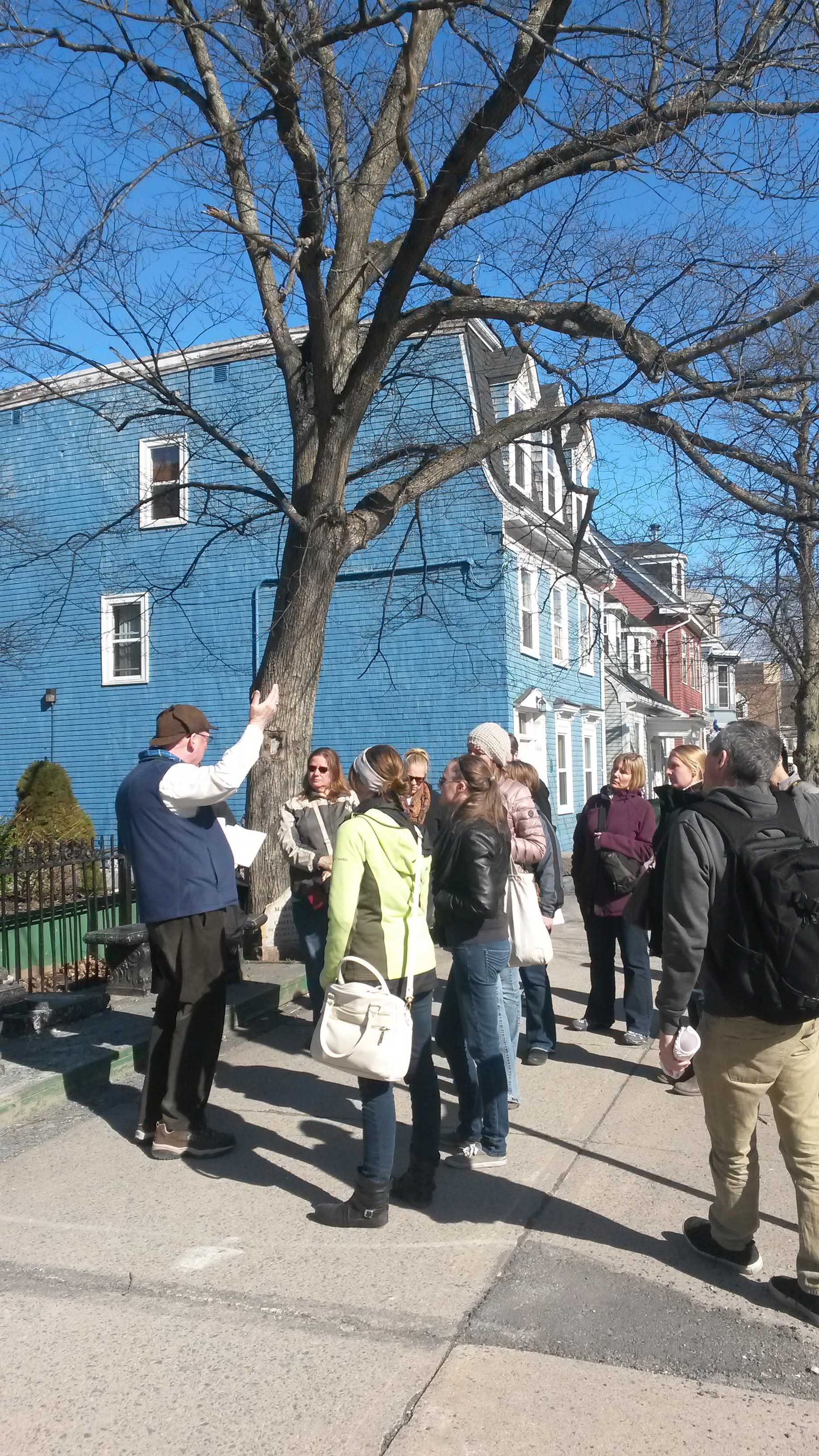 (May 7, 2015, Halifax, Nova Scotia) Over the past week, faculty and students from the Geotourism and Historic Preservation Programs at Eastern Michigan University in Ypsilanti (greater Detroit) visited Lunenburg and Halifax to learn more about Nova Scotian heritage buildings and cultural landscape. Heritage Trust of Nova Scotia welcomed the students to Halifax and helped organize tours for them while they were in the city.
Study group leader, Dr. Kim Kozak, who received her Master’s at Dalhousie University, now heads up the Geotourism Program in the Geography Department at Eastern Michigan University. She was accompanied by the program’s assistant director, Kelly Victor-Burke, who was visiting Nova Scotia for the first time.
Professor Kozak says that Eastern Michigan is one of only two universities in the US that offers a Geotourism concentration. Geotourism is a form of Sustainable Tourism that focuses on preserving and protecting the unique character of a tourism destination.
In addition to the geotourism students, several on the Lunenburg - Halifax study trip are in the Historic Preservation Master’s program at EMU. This program delves into historic building construction and interpretation, as well as, cultural resource management.
“Historic preservation is a growing profession” says graduate student Janelle Keyser, who adds, “There is a tremendous emotional appeal to historic sites. You have to know how buildings were made in order to preserve them properly.” The graduates of this program are in demand, and find work with architectural firms, municipalities, and in parks and historic sites.
At the beginning of their study trip, the American students spent several days in Lunenburg touring the UNESCO World Heritage Site. Lunenburg, considered the best example of a British 18th century colonial town in North America, has many well preserved 18th century buildings, and offered the students insight into why the town was chosen as a World Heritage Site. The students were guided through the town by Shelah Allan, owner of Lunenburg Walking Tours, and visited the Fisheries Museum, the Dory Shop and the Heritage Carpentry program at the NSCC Lunenburg Campus.
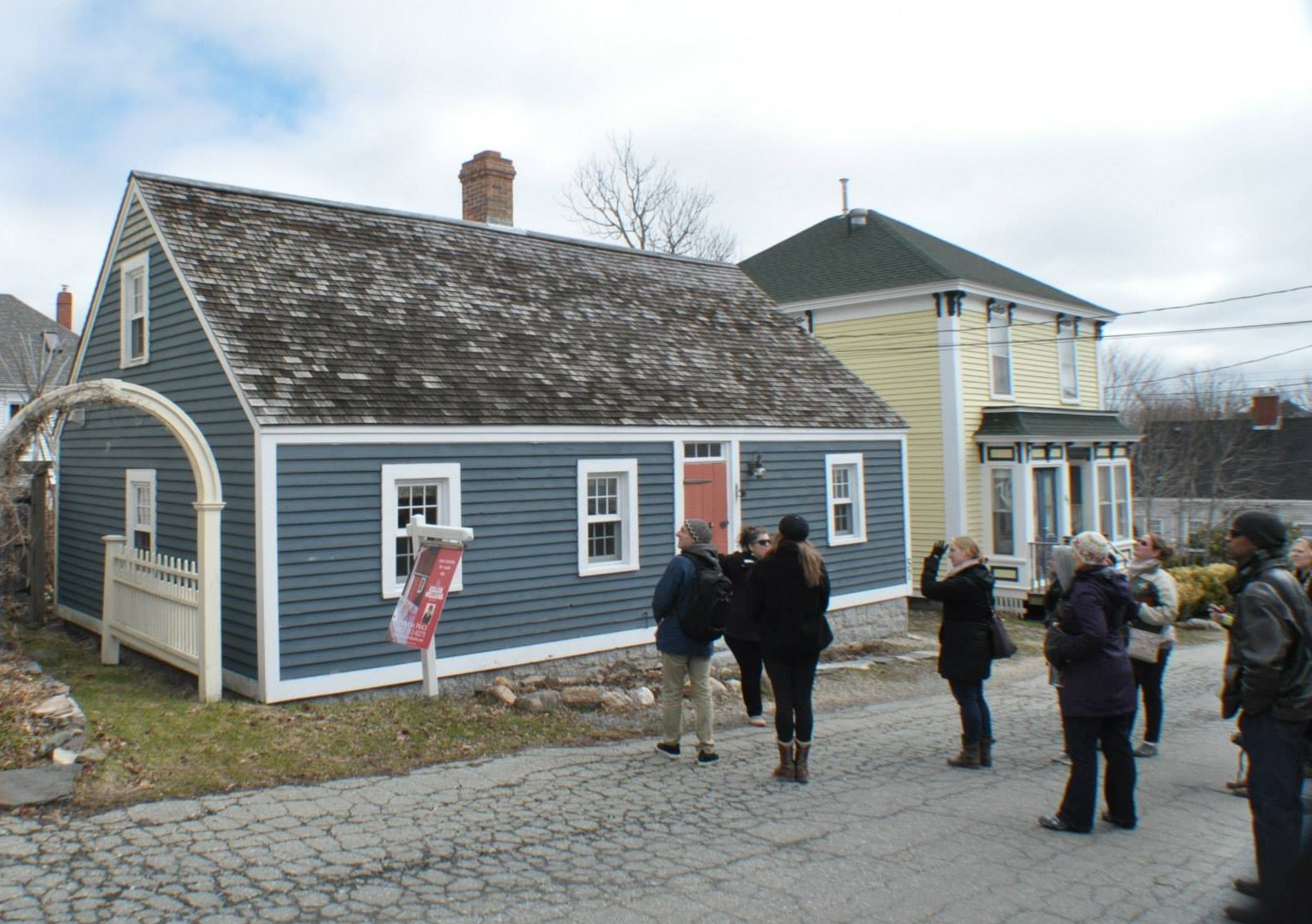
“Tourists want an authentic experience and Lunenburg offers this. It is a living community in an historic setting,” said Professor Kozak. “The students were so impressed with how everyone they met took the time to speak to them. The authentic tourism experience in Nova Scotia is its people.”
Several students mentioned that the tour of the Dory Shop on the historic Lunenburg waterfront was a real highlight. “The Dory Shop is the perfect mix of what geotourism is all about,” said Erica Steuwe, one of the Geotourism students.
To round out their trip, Heritage Trust of Nova Scotia welcomed the visitors to Halifax on Saturday, organizing a tour of the historic Brunswick Street area for the study group. Guided by local historian Blair Beed, the students spent the afternoon on a walking tour passing by such historic buildings as Churchfield Barracks, known locally as the 12 Apostles built by the British Army in 1903, several Georgian cottages with their distinctive Scottish dormer windows, and the Little Dutch (Deutsch) Church, constructed in 1756.
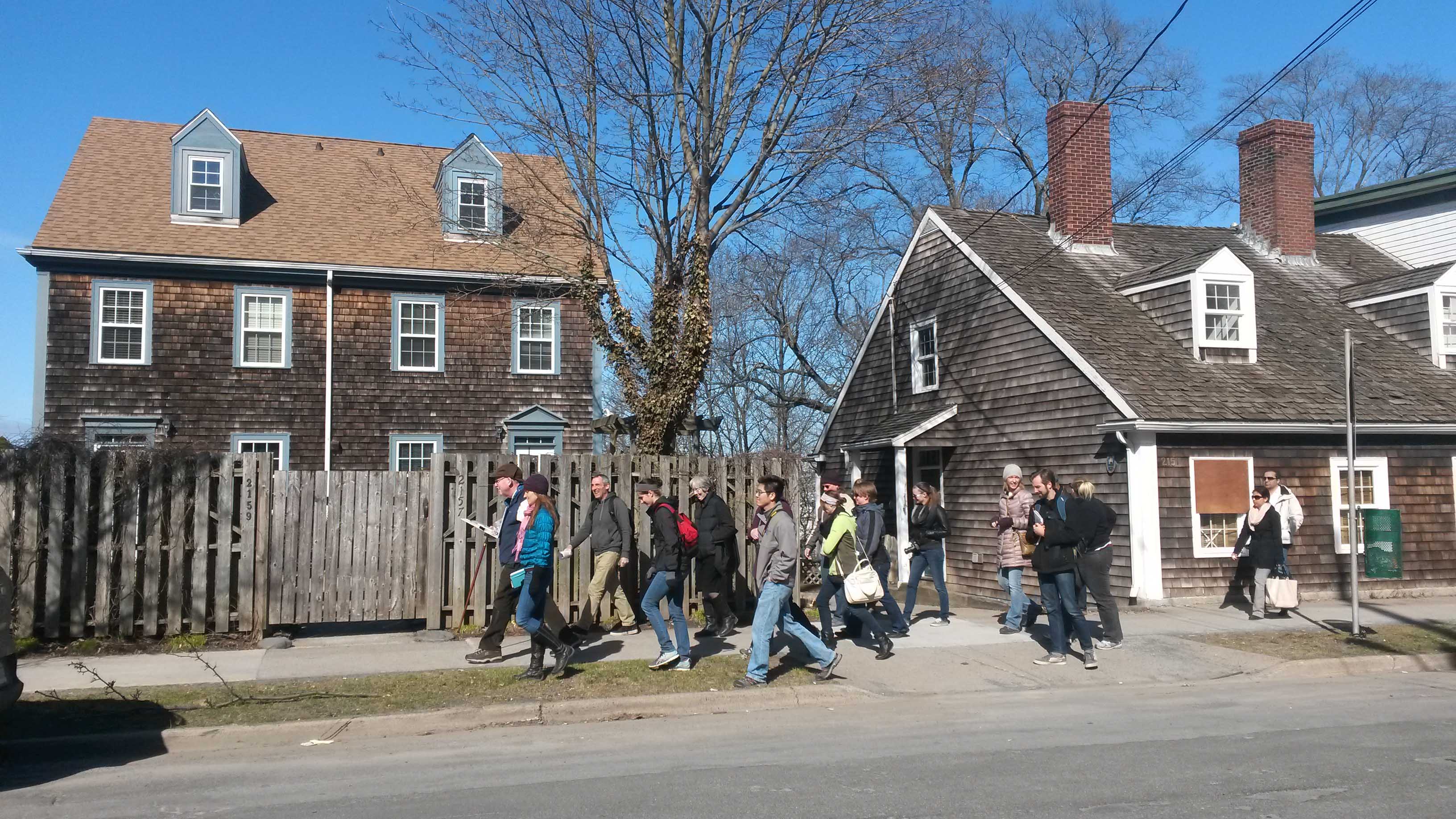
The students toured the interior of historic St. Georges Round Church and St. Patrick’s Church, both on Brunswick Street, and learned more about the restoration projects for both churches. The students finished their tour by stopping at Morris House, the fourth oldest building in Halifax, which was moved to its new home on Creighton Street in 2013 by Heritage Trust and the Ecology Action Centre. Indoor conservation work is underway now so that young adults in need of housing can call Morris House home.
Kelly Victor-Burke said “We are definitely planning to bring the students on a study trip to Nova Scotia again. There has to be more education about the advantages of geotourism over mass tourism.”
Professor Kozak added, “Developing a tourism destination that is authentic is a challenge.”
When asked to compare their visit to Lunenburg with Halifax, master’s student Lori Taylor-Blitz said, “It’s easy to get a sense of place from Lunenburg whereas in Halifax, heritage buildings are intermixed with large buildings making it difficult to feel a sense of place.”
Linda Forbes, President of Heritage Trust said, "We are happy to work with Professor Kozak and her historic preservation and geotourism students, to show off Nova Scotia's heritage buildings and sites which offer ideal opportunities for geotourism. We look forward to their next visit."
Heritage Trust of Nova Scotia, founded in 1959, is a non-profit registered charity whose goal is to conserve buildings and sites of historic significance, and to promote this important cultural component of Nova Scotia’s identity. Visit our website for more details on upcoming lectures and events www.htns.ca
Posted 14-22-14
Heritage Canada Executive Director to visit the Morris House, innovative housing for young adults, on October 22 at 9:30 am
Date: October 22, 2014
Time: Wednesday, 9:30 AM
Location : Morris House
Contact: Linda Forbes
Phone: 902-423-4807
E-mail: president@htns.ca
Natalie Bull, Executive Director of Heritage Canada The National Trust (HCNT), will make a site visit to the Morris House, 2500 Creighton Street, Halifax on October 22 at 9:30 am. The Morris House is owned by Heritage Trust of Nova Scotia (HTNS), an institutional member of Heritage Canada. HTNS is a partner with Metro Non-Profit Housing Association (MNPHA) and the Ecology Action Centre (EAC) in the conservation of the circa 1764 building for use as safe, affordable housing for young adults. It was moved on a frigid weekend in late January 2013 from the Old South Suburb to a lot in the North End of Halifax.
Since then, some of the labour and materials for work on the exterior have been purchased, while the rest has been donated. “It has been heartwarming to see the generous support for this endeavour from individuals, the business community, organizations and the municipality, before, during and after the move,” said MNPHA Executive Director, Dr. Carol Charlebois. Fundraising is ongoing for the interior work.
The Morris House is one of a series of stops on Ms. Bull’s itinerary. She has met with officials in Truro to discuss the repurposing of the provincially designated Old Provincial Normal College (1877) as the new Colchester-East Hants Public Library and will be travelling to Annapolis Royal for a meeting Wednesday afternoon with Jane Nicholson, businesswoman, heritage developer and member of several heritage organizations. At that time, Ms. Bull intends to visit several Fundy Shore lighthouses that have received support from HCNT through the Runciman Endowment Fund for Heritage Conservation
For more information please contact Linda Forbes, President, Heritage Trust of NS, 902-423-4807 or president@htns.ca.
-30-
Posted 02-16-10
Art Irwin Speaks about St. Margaret's Church Thursday, Feb. 18
Date: February 18, 2010
Time: Thursday, 7:30 PM
Location : Nova Scotia Museum, Summer Street
Contact: Phillip Pacey
E-mail: Phil.Pacey@htns.ca
Energy Consultant and CBC Radio Noon expert Arthur Irwin will speak about St. Margaret's Church in Oakfield at the Nova Scotia Museum on Summer Street at 7:30 p.m. on Thursday, Feb. 18.
St. Margaret’s of Scotland Church was built by an Englishman, Lieutenant General John Wimburn Laurie. He arrived in Canada in 1861. In 1865 he purchased 800 acres in Oakfield and established one of our earliest communities. He brought twenty families from England. This beautiful structure was built from the pine logs on the estate for the family and servants, modelled after the Old English tradition. The chapel was one of the first buildings to be erected which was followed by a school, post office, stable, sawmill, stage coach inn, railway siding and two quarries. Three generations of Lauries are buried behind the Chapel.
In October, 1999, Arthur Irwin was asked by the Anglican Diocese of Nova Scotia, to assist in the planning process to make the building more energy efficient. Mr. Irwin has dealt with several hundred historic structures throughout his career but this example of a wonderful “Historic Gem” had a special significance and presented a number of interesting challenges as he upgraded the energy efficiency of this unique structure.
The original oil lamps are still hanging from the high ceilings, a leather bound bible on the lectern inscribed “Oakfield Church 1868”. A beautiful stained glass window behind the Altar remains intact.
"Simplicity, warmth and a quiet elegance produced from the surrounding stately pines caught my attention," says Mr. Irwin. "I visualized an imaginary sign stating, 'Do not disturb' hung across the dark stained interior wainscoting which reminded me to prevent any signs of man made footprints.”
All of the exterior walls have been upgraded, insulated, windows replaced and a new heating system installed. The “Chapel In The Pines” will hopefully stand for another 130 years, respecting our forefathers contribution to our heritage !
The meeting is open to the public, free of charge and is sponsored by the Heritage Trust of Nova Scotia. Light refreshments will be served.
-30-
Posted 02-08-10
Presentation of Heritage Trust of Nova Scotia Built Heritage Awards
Date: February 15, 2010
Time: 3:00 – 5:00 PM (Presentations begin – 3:30 pm, Reception to follow)
Location : Halifax City Hall (Halifax Hall) Argyle St. Halifax
Contact: Peter Delefes, President, Heritage Trust of Nova Scotia
Phone: (902) 826-2087;
E-mail: president@htns.ca
AWARD RECIPIENTS:
DOMINION PUBLIC BUILDING TOWER RESTORATION PROJECT
1713 Bedford Row, Halifax, N.S.
The Dominion Public Building was erected in 1936 in downtown Halifax and for many years dominated the Halifax skyline. Its design was influenced by the Art Deco style. It is characterized by symmetry and balance and contains many decorative elements on its sandstone exterior. It was designated as a registered heritage building in 1990. Public Works and Government Services Canada completed a renovation of the interior of the building in 1992. In 2007 a two year project began to restore the tower on the building. Quality workmanship and attention to detail by a Nova Scotia company resulted in the careful removal, restoration and precise reinstallation of over 2000 stone units and replacement of some 140,000 specially manufactured bricks as well as replacement of the copper cladded dome back to its original details. The $ 9 million project conformed in all respects to the Standards and Guidelines for the Restoration of Historic Buildings.
GARDINER’S MILL DAM RESTORATION PROJECT
Gardiner’s Mill Lake, Yarmouth Co., N.S.
The Gardiner’s Mill Dam was constructed prior to 1855 to provide a water powered energy system for a saw mill on the banks of the Annis River. In 1937, the mill, the dam and nearly 3000 acres of land were purchased by two sisters who were heirs of the Johnson and Johnson Co, in the U.S. In 1937, the sisters embarked on a reconstruction project, completely restoring the dam and naming the lake, Sisters’ Lake. Formation of the lake created a vibrant cottage community on its shores. The present owners of the dam maintained it until 2004 when the wooden center of the dam failed, causing the lake to empty. In return for its restoration and maintenance the owners have agreed to deed the dam to the local Gardiner’s Mill Dam Homeowners’ Association. The dam was completely restored in 2009 and the lake replenished. Provincial designation of the dam is being sought.
-30-
Posted 5-24-09
HRMbyDesign - Public Hearing , Tuesday May 5, 2009 6pm, City Hall, Halifax
Supporting Articles (details and information in pdf link)
Posted 5-24-09
April 2009 - The Heritage Trust of Nova Scotia is concerned that HRMbyDesign would put at risk the fragile safeguards that protect downtown Halifax's remaining built heritage.
HRMbyDesign recommends increases in the height limits on heritage properties in downtown Halifax. "This would increase the incentive for developers to demolish existing heritage buildings", said Heritage Trust president Phil Pacey. Prior to amalgamation, the city of Halifax established as-of-right height limits in downtown Halifax to protect heritage assets and to gain control over the design of larger developments.At that time an as-of-right height limit of 25 feet was established east of Hollis Street, similar to the heights of some heritage buildings. In the Central Business District west of Hollis Street, the height limits were set at 40 feet. In 1981 an absolute height limit of 45 feet was placed on some properties in the south end of the city. "For three decades these height limits have protected heritage buildings and owners knew that", said Mr. Pacey.
"Owners knew if they demolished their buildings they would have difficulty getting approvals for taller ones. They looked at their options, and decided that the most cost effective and profitable option was maintaining the existing buildings.They have followed the rules, and as a result some very fine buildings have been refurbished. However, developers insist on an even playing field," said Dr. Pacey. He said owners agreed to have their buildings registered under the Heritage Property Act, when it was introduced in 1980. Only three registered heritage buildings have been demolished in the study area, which is a rate of loss of 0.08 per cent a year. "Existing height limits are working well."
He said HRMbyDesign would greatly increase as-of-right height limits to between 72 and 160 feet in most cases, which would create a financial incentive for speculators to buy buildings, apply to demolish, wait for a year, demolish and then build larger buildings. "If HRMbyDesign were adopted, about 100 historic buildings would be at greater risk of demolition. This would make it difficult to establish a heritage conservation district in the future, as developers would resist any attempt to bring the height restrictions back down to the historic norms," he said. Mr. Pacey said it could also lead to "planning blight", as speculators would not wish to make repairs, expecting to demolish the buildings and build larger ones in a few years.Currently, he said, Halifax's 17 citywide heritage policies, adopted over the past 30 years to protect heritage assets, compared favourably "with the best international standards"today. The Utility and Review Board and the Courts have also interpreted and upheld them. HRMbyDesign would state that these policies would no longer apply downtown. HRMbyDesign would rescind policies that have protected views of Halifax harbour from Citadel Hill between view planes. Heights would be set so high, "it would not be possible to see the harbour over the buildings."
In summary, Mr. Pacey said HRMbyDesign "would weaken the protection in downtown Halifax by increasing height limits and deleting or ruling out good policies that generations of Haligonians and their elected representatives have worked on together to protect their heritage. I understand the aim of HRMbyDesign is to increase density in downtown Halifax. The Trust believes, however, that moderate increases in density can be achieved by building on the 1,050,000 square feet of vacant land in downtown Halifax. It's neither necessary nor desirable to put our heritage at risk.”
Municipal Heritage Properties Would Be Placed at Risk by HRMbyDesign (link to 0.1 Mb PDF)
Heritage Policies at Risk (link to 0.1 Mb PDF)
HRM BY Design – A House of Cards(link to 0.1 Mb PDF)
Posted 3-27-09
HRMbyDesign Threatens Heritage in Downtown
By PHIL PACEY - Fri. Mar 27 - 6:34 AM
Regarding your editorial ("Heritage overreach") of March 24, the Heritage Trust of Nova Scotia is concerned that the current municipal heritage protection system in downtown Halifax is threatened by HRMbyDesign. Our alternative plan is a response to this threat.
One hundred and twenty-six buildings in the downtown are registered under the Heritage Property Act. However, this Act only gives protection from demolition for a year, unless the municipality takes action.
At present, the heritage buildings are protected by excellent policies in the Municipal Planning Strategy. These heritage policies state that the municipality will seek to save the heritage buildings, and mandates several actions to achieve this, including negotiating covenants, leasing the buildings, providing financial assistance, and even acquiring the buildings.
In addition, the municipality has set absolute or as-of-right height limits on heritage properties at 25, 35, 40, 45 and 52 feet – heights similar to the heritage buildings. This means that there is little incentive to tear down a heritage building to construct a new building of a similar size.
This protection system has worked well. In the last 29 years, only three registered heritage buildings have been demolished in downtown Halifax, a rate of loss of only .08 per cent per year.
But now the protection system is threatened. HRMbyDesign, a municipal planning exercise, proposes to knock out the key protections for heritage buildings.
First, it would increase the as-of-right and absolute height limits, to heights between 72 and 160 feet, well in excess of the heights of the heritage buildings. This would provide a financial incentive to replace a heritage building by a taller building. For example, a two-and-a-half-storey Georgian house on Hollis Street could be replaced by a seven-storey apartment block.
Second, HRMbyDesign would totally rescind a number of excellent heritage policies, while stipulating that many other heritage policies would not apply in the downtown area, our most historic square kilometre.
Repeatedly, Heritage Trust has asked the HRMbyDesign planners to keep the protective height limits and policies, and, repeatedly, we have been rebuffed. Accordingly, we have prepared, and formally applied for, an alternative plan.
A complete plan must have provisions, not just for heritage, but also for the other issues facing the downtown. Ours is a complete plan. We have recommended adopting family housing provisions from the existing Land Use By-law. Wind studies, required for development agreements today, would continue to be required. The much-photographed view of George’s Island from the roadway on Citadel Hill would be protected. We have borrowed environmentally sustainable building standards from Toronto and affordable housing targets from Vancouver.
We invite your readers to view our plan. It is only 13 pages long. We think you will find it addresses the issues facing downtown Halifax. It keeps the protective policies and height limits for heritage properties that have worked so well. It is a good plan for our future.
Readers should not be misled by the HRMbyDesign plan, when it claims to provide "enhanced" heritage protection, by saying that heritage conservation districts would include 70 per cent of the heritage buildings. Only 20 per cent would be included at first. Heritage conservation districts for 50 per cent of the heritage buildings would only be "considered" later, and, if the height limits were increased now, it would be very difficult to establish heritage conservation districts later.
And HRMbyDesign would leave 30 per cent of the heritage properties in the downtown out of any potential conservation districts. So, a four-storey Victorian shop on Granville Street could be replaced by a 14-storey tower.
Advocates of HRMbyDesign claim the present system is weak. However, the proof is in the pudding. The present system has protected 97.7 per cent of the downtown heritage buildings for 29 years.
There is no excuse for increasing the height limits on the heritage buildings. There is no excuse for deleting the excellent heritage policies that have served us so well.
The HRMbyDesign plan would take big steps backward in heritage protection. Our alternative plan keeps the protection system and encourages compatible new development.
Posted 11-12-08
Protecting Our Assets - Presentation to Urban Design Task Force (links to 2 Mb PDF)
The Painted Rooms Project